So I think I might have jinxed myself with my last post when I was talking about traditional chinese medicine. . . and hoping that I don't have to go to a hospital in China.
As I mentioned, I was attempting to ride my bike from my host family's apartment to school. I failed to mention some other important details, i.e. that the bike seat was to short for me and after several attempts to raise it, I merely succeeded in almost breaking it and apparently, almost breaking my tailbone. (I'm feeling dramatic, sorry, feel free to roll your eyes. . . I just bruised it or something. . )
It was very inconvenient to have class for 4 + hours a day, staying in hard Chinese desks when it is extremely uncomfortable to sit. . .
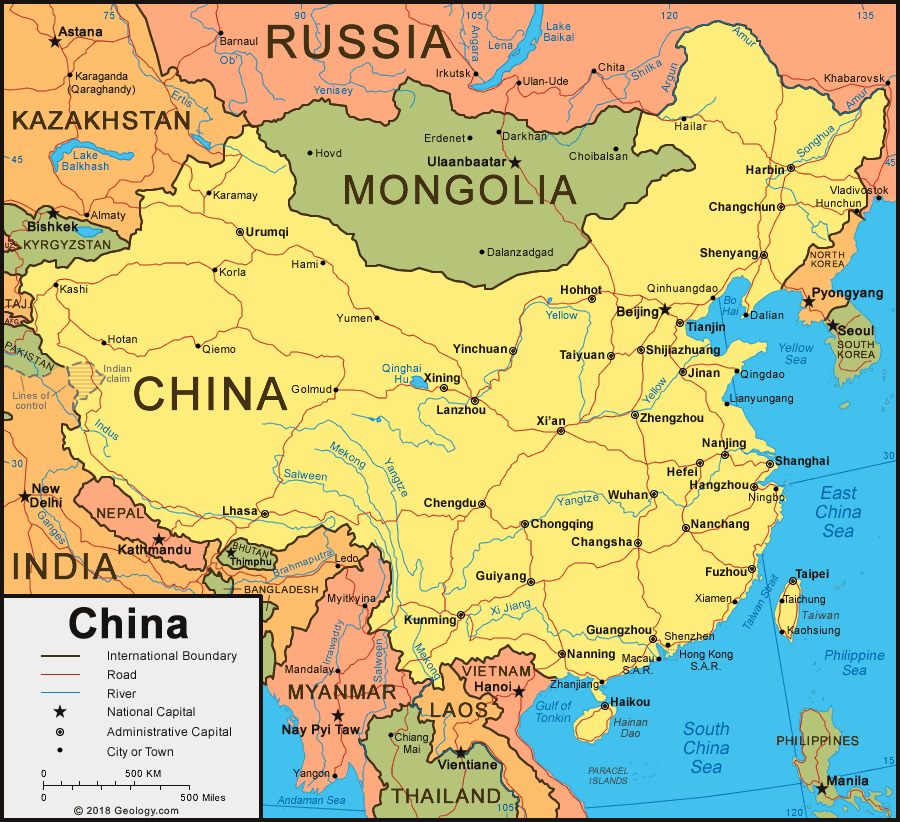
So apparently, I took too much motrin . . . and in addition to hurting, I didn't feel/look well. So during lecture on Monday one of the SIT aides took me to one of the Kunming hospitals and I had an interesting experience. As with any hospital, it involved waiting, but in China most of the waiting is due to the pre-payment system of medicine. You have to pay for the service/ the medicine/ whatever, before they'll do anything . . . or at least that was my experience. But because I was a Westerner, I was put in a special "operating room" by myself to wait. That is until someone who was rushed in looking half dead and I was kicked out of the room. Then I just waited in the hall.
All-in-all, my trip to the chinese hospital wasn't bad (looking back, I have to just laugh, especially given the location of my pain; I kept having flashbacks to the part of Forest Gump where he gets shot in the buttocks and is in the hospital)
However, when I got home and realized that ALL they gave me was antibiotics!!! it was probably one of the most frustrating Chinese experiences yet. I was hurting and I wanted it to stop and they gave me three different types of antibiotics!! No pain meds. THREE types of antibiotics. . . sigh.
But I'm better now. (And it could have been worse, I could have gotten malaria, dysentery, and then the flu. . . Glad you're feeling better Becca! Stay healthy! )
We're about right in the middle of our seminar of "Minority Culture" and field study prep so our recent afternoon lectures have been focusing on that. Thursday afternoon we thought we were just going to see a demonstration of a minority dance at some place close to home. However, we ended up driving an hour, to an edge of Kunming to an international school, where we ended up basically being the demonstration. We arrived to an auditorium with a stage and sat down it our seats of honor (the ones in the first row with the water bottles on the desks) and then one of my classmates was called to the stage to help demonstrate. Then we were ALL called to go to the stage and given a Wa (the minority group, they live on the boarder between Yunnan and Burma) gong. We were then taught a "dance" using the gongs, then a song, then a wild dance that required that we shake our heads and hair. It reminded me of Kukuwa class on the Vern freshman year. Except I was one of 13 westerners on a stage, with half an auditorium full of elementary Chinese students watching and laughing at us as we danced and attempted to sing songs in the Wa language. It was definitely different, but much more fun!, than I was expecting.

Another highlight of the week, was, yet another surprise, a life history assignment that I had to do. On Sunday, I asked Popo (my Chinese grandmother) if I could interview her. So Sunday night after dinner we sat down in the living room and my host mom helped translate my questions and Popo's answers. It turned out that Popo was the daughter of a landlord before the Cultural Revolution (which meant that after Mao took power she essentially lived in a hell-on-earth of sorts). Being part of a landlord family was enough to make you one of the lowest people in society from the founding of the PRC until Deng Xiao Ping took power. When she was just in elementary school, she was dismissed from further study soley because she was a former landlord's child. And even today, despite China being the land of the iron rice bowel and still "technically" some form of Communism, Popo has no pension or government support, despite paying taxes for many years on her tailoring business. It was not so much what she told me that happened, its the stories that I've heard of the fates of other landlords, the humiliation and shocking treatment they were subject too, and its just hard to imagine all that she must have lived through.
All last week Chinese class was winding down- it was our last week of classes and the big tests - Da kaoshi, were today. It's crazy to think I'm done with Chinese class until January and its not even Thanksgiving break yet!
Now that Chinese is done, we're going to set off (tomorrow) on our "Northwest Yunnan Adventure," the one where we almost go into Tibet :-)! This trip was definitely one of the things that when I was looking at study abroad programs, made this particular program sound awesome.
However, after we get back from the trip its ISP (Independent Study Project) time. I'm still (of course) waffling between ideas.
My latest idea is a result of my homestay. I have been shocked to notice that the average Chinese person is really "green." They conserve water, electricity, and since June its been illegal for stores to give free bags with purchases. Pretty much EVERY apartment building has solar heaters on the roof and the electric heater is just back up. I'm living with a very comfortably middle class family in a very nice apartment and everyone still uses a little plastic bucket with like the leftover water from cleaning or washing dishes, etc. to flush the toilet! If I didn't see it- I wouldn't believe it. Especially seeing as this country is probably one that I think of as a giant polluted mess. I've seen the Beijing smog and its ridiculous. Granted. . . the Kunmingren aren't doing this because its environmentally friendly, but rather because its friendly on their pocketbooks. But its still, and perhaps, because of that, fascinating to me.
As I mentioned, I was attempting to ride my bike from my host family's apartment to school. I failed to mention some other important details, i.e. that the bike seat was to short for me and after several attempts to raise it, I merely succeeded in almost breaking it and apparently, almost breaking my tailbone. (I'm feeling dramatic, sorry, feel free to roll your eyes. . . I just bruised it or something. . )
It was very inconvenient to have class for 4 + hours a day, staying in hard Chinese desks when it is extremely uncomfortable to sit. . .
So apparently, I took too much motrin . . . and in addition to hurting, I didn't feel/look well. So during lecture on Monday one of the SIT aides took me to one of the Kunming hospitals and I had an interesting experience. As with any hospital, it involved waiting, but in China most of the waiting is due to the pre-payment system of medicine. You have to pay for the service/ the medicine/ whatever, before they'll do anything . . . or at least that was my experience. But because I was a Westerner, I was put in a special "operating room" by myself to wait. That is until someone who was rushed in looking half dead and I was kicked out of the room. Then I just waited in the hall.
All-in-all, my trip to the chinese hospital wasn't bad (looking back, I have to just laugh, especially given the location of my pain; I kept having flashbacks to the part of Forest Gump where he gets shot in the buttocks and is in the hospital)
However, when I got home and realized that ALL they gave me was antibiotics!!! it was probably one of the most frustrating Chinese experiences yet. I was hurting and I wanted it to stop and they gave me three different types of antibiotics!! No pain meds. THREE types of antibiotics. . . sigh.
But I'm better now. (And it could have been worse, I could have gotten malaria, dysentery, and then the flu. . . Glad you're feeling better Becca! Stay healthy! )
We're about right in the middle of our seminar of "Minority Culture" and field study prep so our recent afternoon lectures have been focusing on that. Thursday afternoon we thought we were just going to see a demonstration of a minority dance at some place close to home. However, we ended up driving an hour, to an edge of Kunming to an international school, where we ended up basically being the demonstration. We arrived to an auditorium with a stage and sat down it our seats of honor (the ones in the first row with the water bottles on the desks) and then one of my classmates was called to the stage to help demonstrate. Then we were ALL called to go to the stage and given a Wa (the minority group, they live on the boarder between Yunnan and Burma) gong. We were then taught a "dance" using the gongs, then a song, then a wild dance that required that we shake our heads and hair. It reminded me of Kukuwa class on the Vern freshman year. Except I was one of 13 westerners on a stage, with half an auditorium full of elementary Chinese students watching and laughing at us as we danced and attempted to sing songs in the Wa language. It was definitely different, but much more fun!, than I was expecting.

Another highlight of the week, was, yet another surprise, a life history assignment that I had to do. On Sunday, I asked Popo (my Chinese grandmother) if I could interview her. So Sunday night after dinner we sat down in the living room and my host mom helped translate my questions and Popo's answers. It turned out that Popo was the daughter of a landlord before the Cultural Revolution (which meant that after Mao took power she essentially lived in a hell-on-earth of sorts). Being part of a landlord family was enough to make you one of the lowest people in society from the founding of the PRC until Deng Xiao Ping took power. When she was just in elementary school, she was dismissed from further study soley because she was a former landlord's child. And even today, despite China being the land of the iron rice bowel and still "technically" some form of Communism, Popo has no pension or government support, despite paying taxes for many years on her tailoring business. It was not so much what she told me that happened, its the stories that I've heard of the fates of other landlords, the humiliation and shocking treatment they were subject too, and its just hard to imagine all that she must have lived through.
All last week Chinese class was winding down- it was our last week of classes and the big tests - Da kaoshi, were today. It's crazy to think I'm done with Chinese class until January and its not even Thanksgiving break yet!
Now that Chinese is done, we're going to set off (tomorrow) on our "Northwest Yunnan Adventure," the one where we almost go into Tibet :-)! This trip was definitely one of the things that when I was looking at study abroad programs, made this particular program sound awesome.
However, after we get back from the trip its ISP (Independent Study Project) time. I'm still (of course) waffling between ideas.
My latest idea is a result of my homestay. I have been shocked to notice that the average Chinese person is really "green." They conserve water, electricity, and since June its been illegal for stores to give free bags with purchases. Pretty much EVERY apartment building has solar heaters on the roof and the electric heater is just back up. I'm living with a very comfortably middle class family in a very nice apartment and everyone still uses a little plastic bucket with like the leftover water from cleaning or washing dishes, etc. to flush the toilet! If I didn't see it- I wouldn't believe it. Especially seeing as this country is probably one that I think of as a giant polluted mess. I've seen the Beijing smog and its ridiculous. Granted. . . the Kunmingren aren't doing this because its environmentally friendly, but rather because its friendly on their pocketbooks. But its still, and perhaps, because of that, fascinating to me.